Two-Post, Four-Post or Scissor Lift: Which One Fits the Work You Do
The three lift types are sold as if they were alternatives. They hold the car in three different ways — and that, not the tonnage, decides which one your…
The three lift types share the same search results and are not alternatives. A two-post takes the car on four pads with the wheels hanging; a four-post carries it on its tyres at ride height; a scissor raises the whole underside on platforms. The work decides, not the tonnage.
Two-post: the default for a repair bay
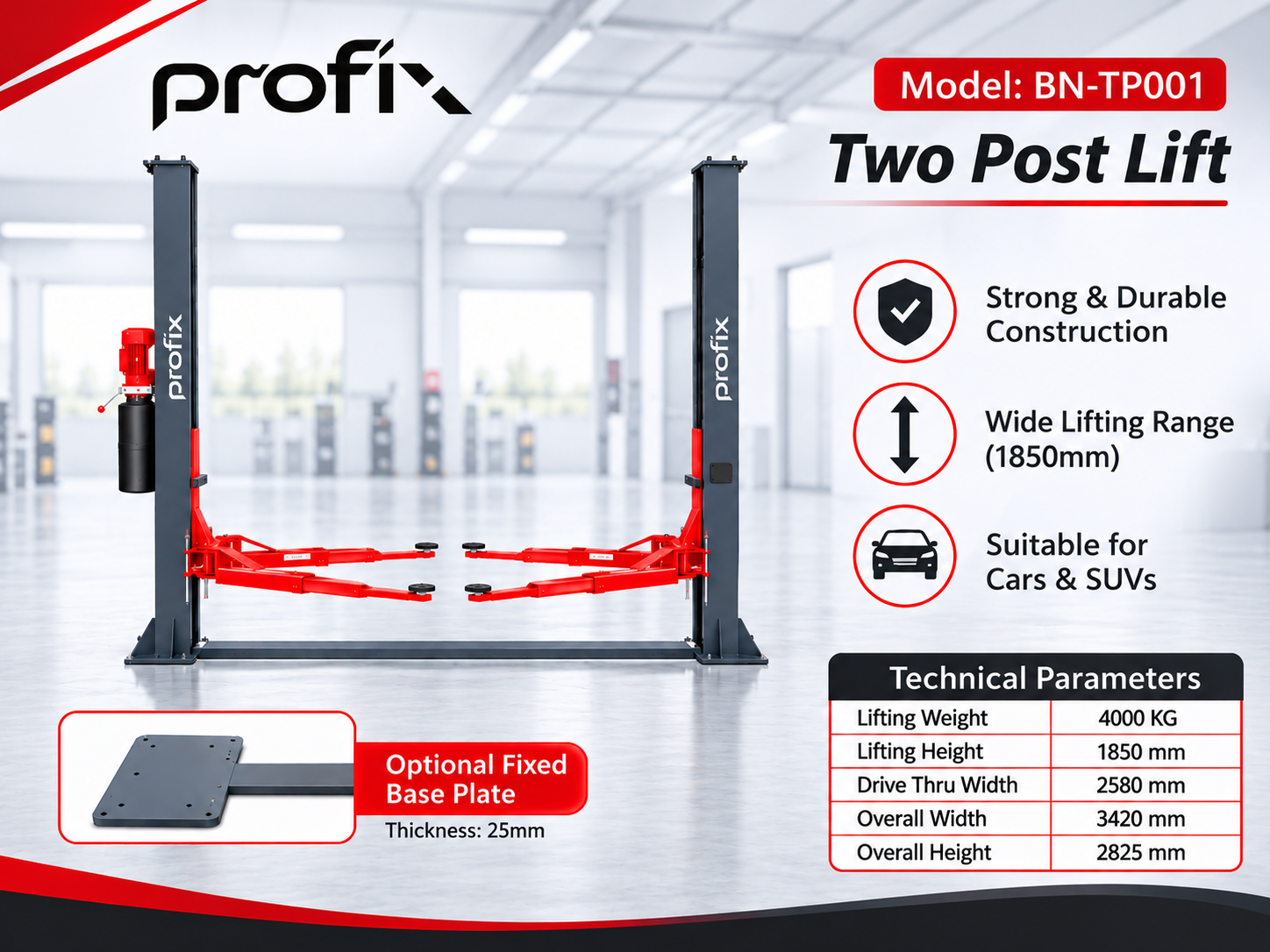
A two-post takes the car at its jacking points. The wheels hang free, which is what brakes, bearings and tyres want, and the floor stays clear underneath. Two dimensions decide fit: pad height when lowered, and overall height. Arm reach is on the two-post range.
- 110 mm pad height is the practical floor for lowered cars; our 4,000 kg unit sits there and lifts to 1,850 mm, with 2,580 mm clear between columns.
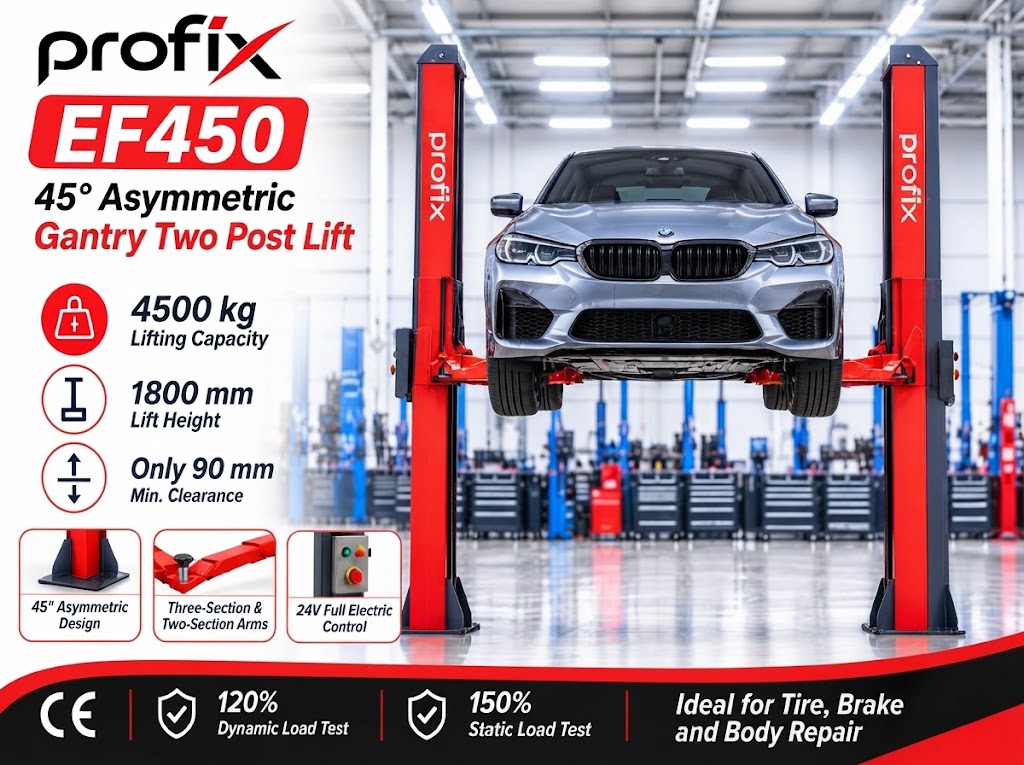
- 3,100 mm overall height is what a floor-plate lift costs instead of an overhead beam — the difference between a lift in a cellar bay and no lift. The 4,500 kg model is built that way; the price is a plate you drive over.
Four-post: an alignment bay that happens to lift
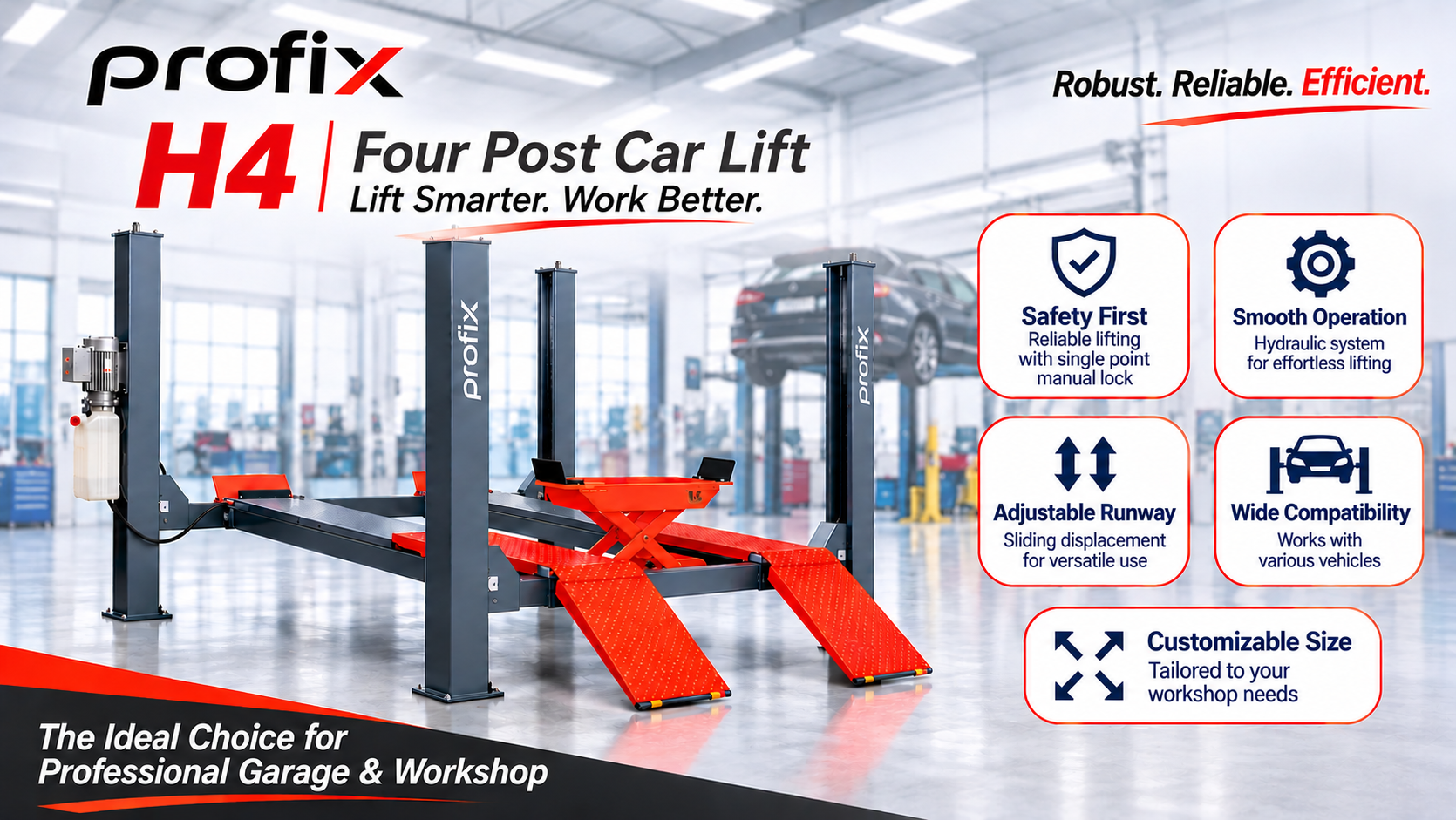
A four-post deck carries the car on its tyres at ride height, exactly the condition alignment equipment is calibrated for. The model is chosen by lane length, not capacity: the space between ramps where both axles sit while the turntables stay in range.
- 4,600 mm of lane on the 4 t deck holds a 4.6 m car with room for the front turntables.
- 5,000 mm of lane is where long-wheelbase vans stop hanging their rear wheels off the runway; 1,000 mm between inner edges on the 5 t also takes a wide SUV.
Scissor: for the floor you cannot dig
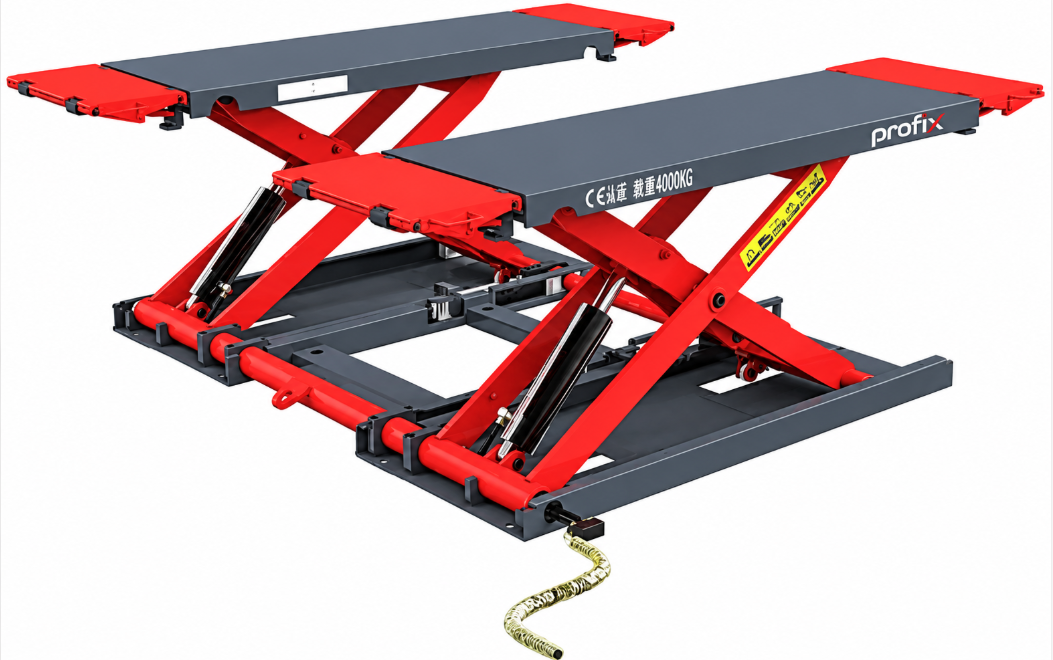
A mid-rise scissor needs no trench or foundation, and the movable ones roll to the car. At 115 mm lowered it takes lowered cars without blocks; 1,000 mm of working height covers wheels, brakes and panels.
The limits, as plainly: 1,000 mm is not standing room, and a scissor holds the whole underside rather than four points, so a wheel-off job is awkward. To walk under the car you need the 110 mm model with 1,800 mm of travel and a 200 mm slab.
Four numbers to settle before asking for a price
- Ceiling height: a gantry two-post is around 3,800 mm, a floor-plate version 3,100 mm.
- The slab: thickness, reinforcement, condition — the anchors match the slab, not the lift.
- Longest wheelbase, not longest vehicle, and whether the wheels stay on: brakes want a two-post, geometry a four-post.
Delivery note: ProFix ships to the UK and the EU with DDP door-to-door delivery — duty and customs clearance are already in the price you see, and sea freight arrives in 45–60 days. No surprise invoice at the border.