Wall Plugs and Anchors: Choose the Fixing for the Wall You Actually Have
Plugs hold by compressing the wall, anchors by expanding against it, and on plasterboard neither works. A short guide to reading the substrate first.
A shelf comes down for one of three reasons: a plug chosen for the wrong wall, a hole drilled larger than the plug, or a load hung on plasterboard that was never going to carry it. No warranty covers any of them: none is a manufacturing fault. The fixing costs a few euros; the decisions before you drill decide whether it holds.
Read the wall, not the plug
Three substrates cover almost every wall in a European house: solid masonry, hollow block or cavity, plasterboard on studs.
- Knock — a dull, solid thud is masonry; a hollow ring that changes every 40 cm is plasterboard on studs.
- Dust — red or grey powder is brick or concrete; fine white powder with a papery feel is plasterboard.
- Mortar joints — a plug in the mortar line holds a fraction of what the brick face holds. Move 5 cm into the brick.
Hollow walls: the board carries, nothing else
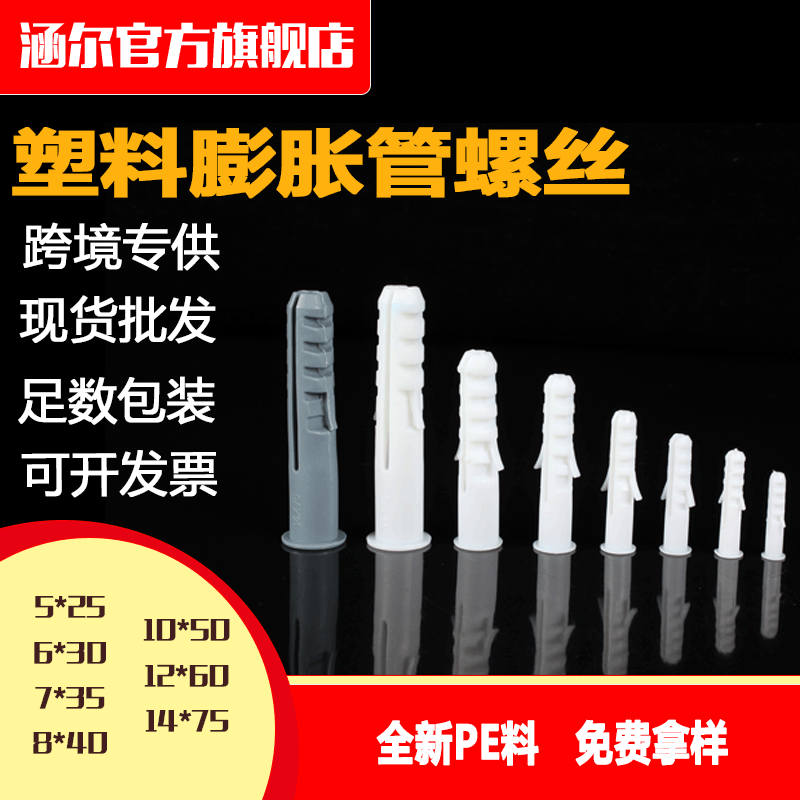
In a plasterboard wall nothing around the fixing can compress, so a brick plug spins and comes out with the screw. The fixing has to grip the board.
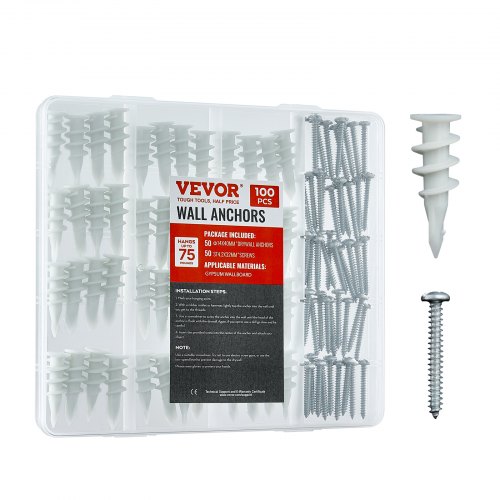
- Metal wings — they open behind the board and spread the load over a disc of it. Ours cover 9–15 mm board and take M4–M5 screws: the board is the limit, not the screw.
- One use only — a wing fixing pulled out once will not hold again. Fit a new one and move the hole.
Plasterboard carries by area, not depth: two hooks 20 cm apart hold more than two at 5 cm. A screwed rail spreads it further — our hook rail is rated 8 kg per hook, an adhesive hook of the same kind 4 kg.
An anchor is a mechanism, not a bigger plug
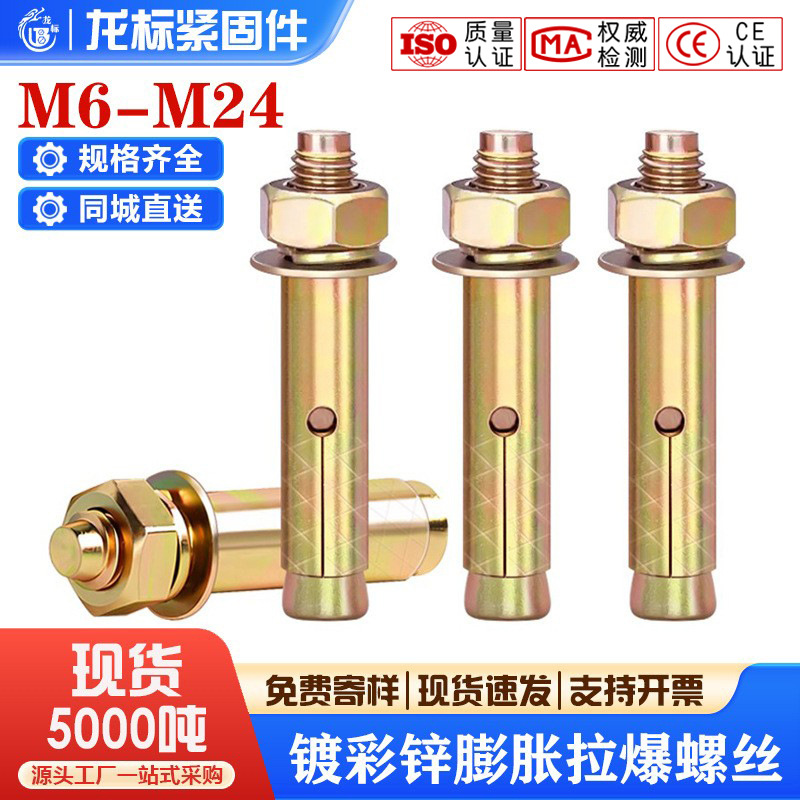
An anchor loads the base material mechanically: a sleeve expands against the hole wall, and the concrete carries, not the thread.
- Only in the tested material — an anchor rated for concrete set in brick is the most common complaint here. Ours are for concrete and solid masonry, not hollow block.
- The hole is part of the spec — diameter, minimum depth and torque are stated per size (M8 × 80, M10 × 100); a millimetre over costs most of it.
- Torque, then stop — over-torquing shears the thread or splits the block, and the fixing is scrap.
Most failures come from two habits: a worn bit that drills 9 mm for an 8 mm plug, so the plug turns; and a screw too short to fill it. Our wood screws run 3.5 × 25 to 6 × 100 mm for that reason. Order of work, then: identify the wall, choose the fixing for it, drill the hole it asks for, load the shelf last. If a fixing has already pulled out, a larger screw will not save it: drill fresh, 10 cm away.
Delivery: we ship to the UK and the whole EU on a DDP basis — duty and clearance already in the price, delivered to your door with nothing to pay on arrival. Sea freight runs 45–60 days door to door; a few very light items travel by air.