Brake Disc Machining: Wet Grinding, Bench Lathe, or a New Pair
Resurfacing only makes sense while the disc has thickness left and the vibration sits in the disc, not the hub. Two machine families do the job very…
Resurfacing a disc is machining with a hard limit: the minimum thickness is stamped on the hub, and every cut takes material away from it. If the disc is near that number, or the vibration comes from the hub and not the friction face, no machine fixes it — a new pair does.
Check the disc before you price the machine
Two measurements decide the job, both taken with the disc still on the car.
- Thickness: micrometer at eight points, against the minimum on the hub. What counts is the number after the cut, not before.
- Runout at the hub face: dial gauge on the car. A disc that is true on the bench but wobbling on the hub vibrates again within a few thousand kilometres.
- Condition: cracks from the bolt holes, blue heat spots, vent ribs showing through — scrap, not a cut.
Wet grinding: the dust goes into the coolant
A wet grinder turns the disc between two heads with coolant flooding the contact point: no dust to extract, and the finish comes off the wheel, not a tool bit. The MGSD400-45 takes discs to 400 mm and 40 mm thick, holds Ra 0.8 µm and face runout within 0.005 mm, 12 minutes a disc; the 450 mm three-spindle version does both faces at once in about 8.
- Capacity: 400–450 mm is cars and light vans, not truck discs.
- The cost: 236–260 kg, 380/220 V, and slurry to settle and change rather than pour away.
Bench lathe: one spindle for discs and drums
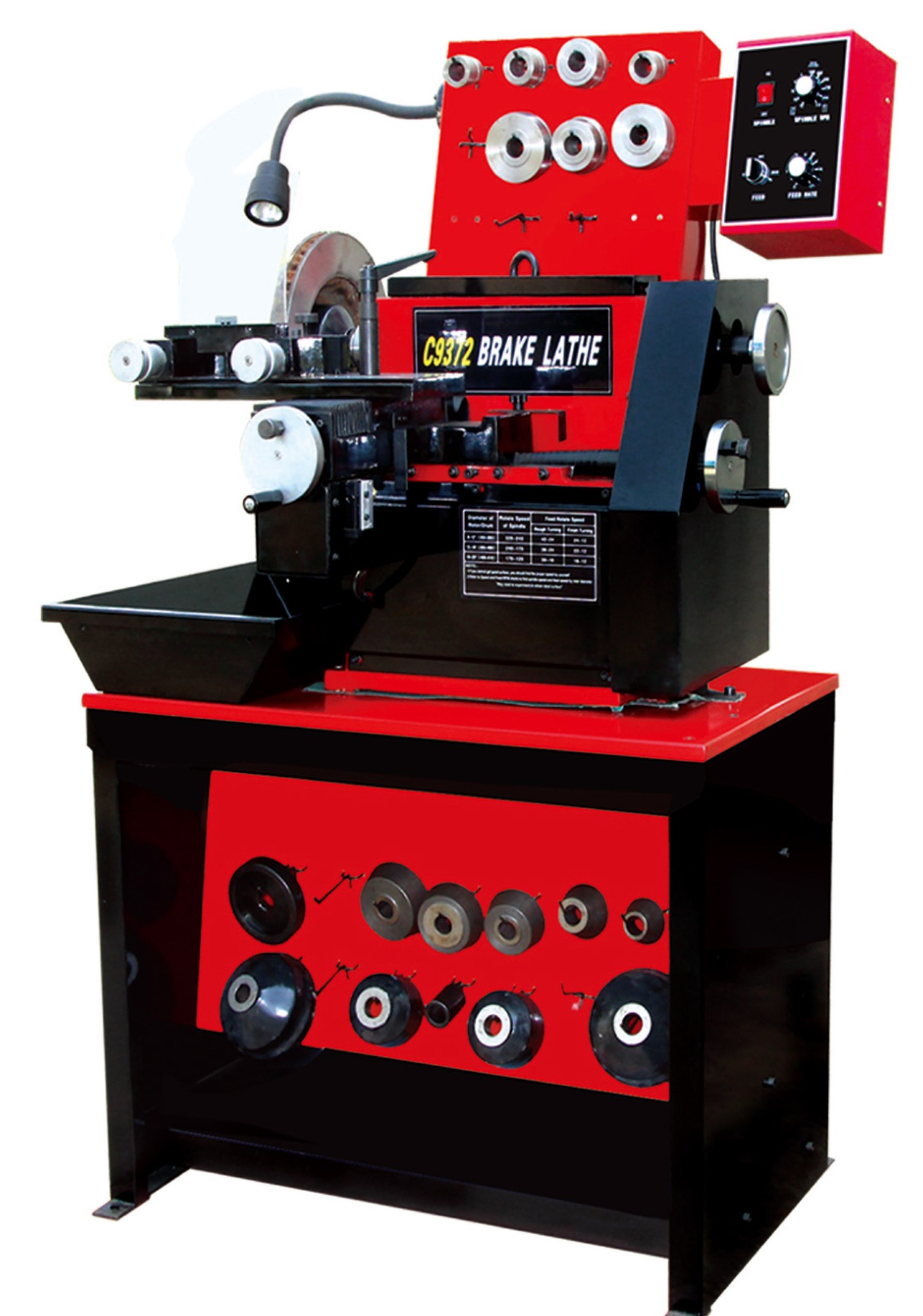
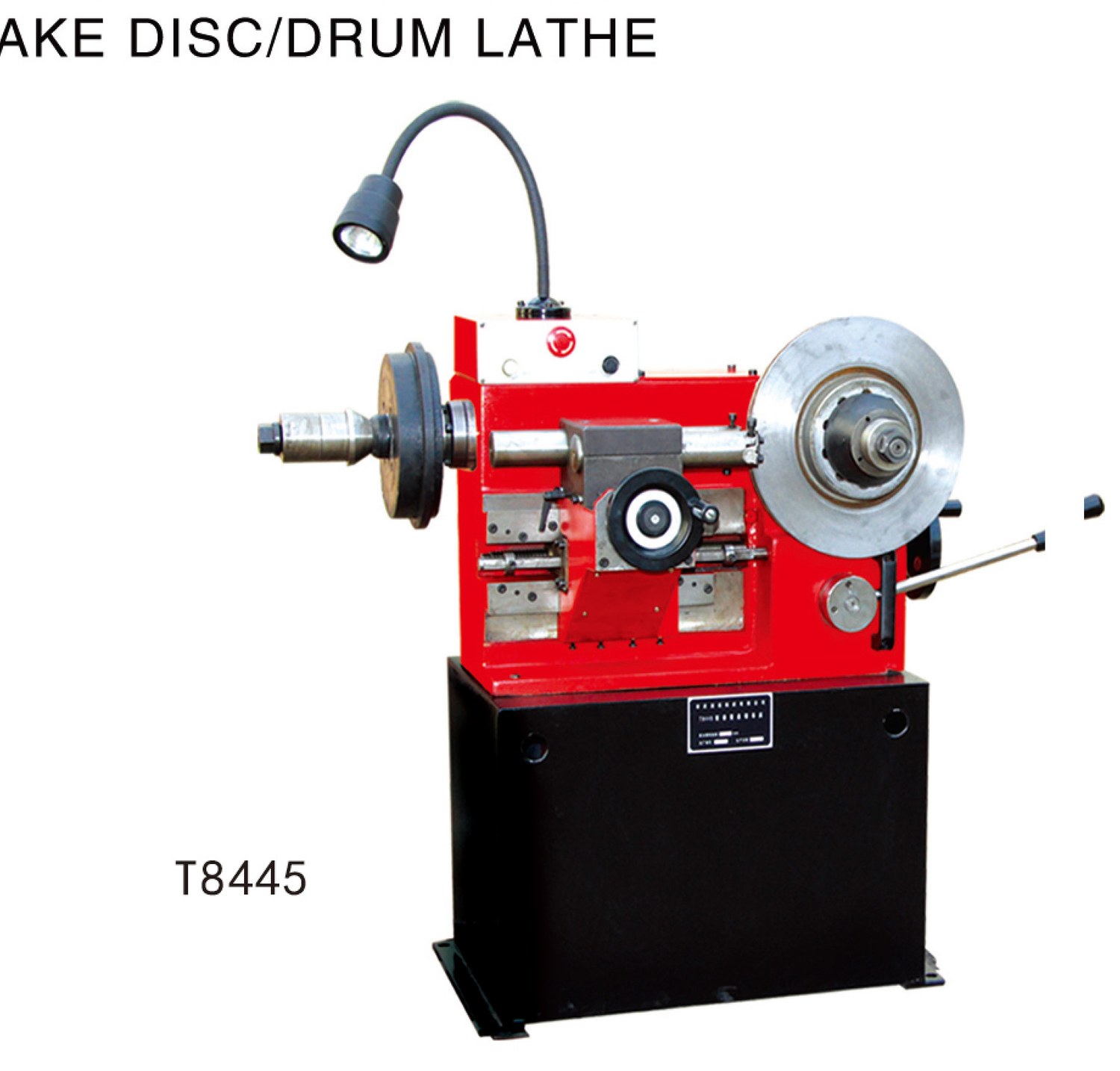
A lathe cuts with a single-point tool and also turns drums — which counts where vans and trailers still run drum brakes. The C9372 spans discs Ø102–610 mm and drums Ø160–715 mm at 229 mm depth, stepless 70–320 rpm, 2.0 kW; the T8445 stops at Ø400 mm discs and Ø450 mm drums on 1.1 kW.
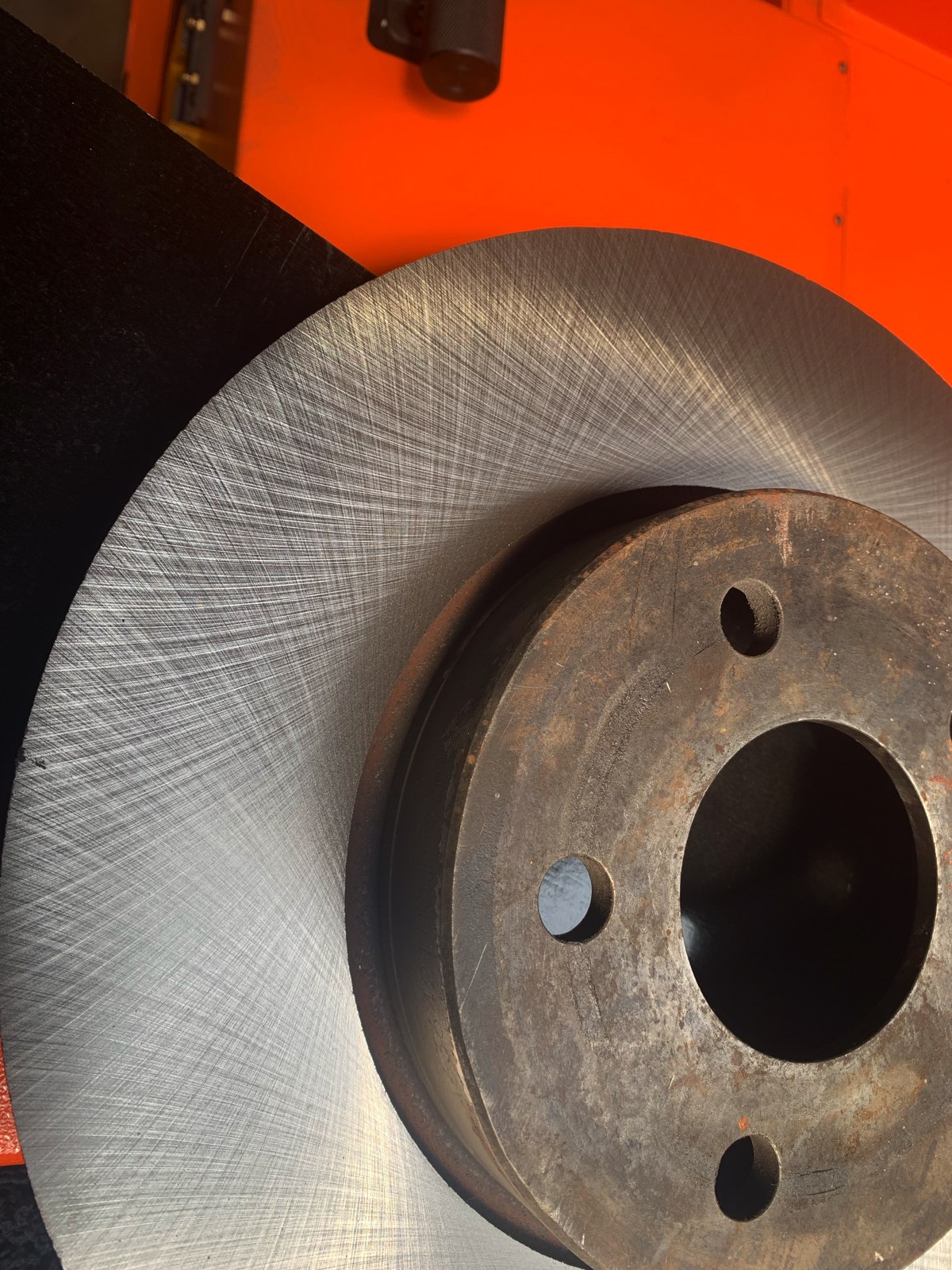
- Setup decides the finish: a blunt tool or a fast feed tears the surface; a light pass at the right speed leaves the cross-hatch pads bed into.
- Off-car stays off-car: neither machine corrects hub flange runout — measure that on the vehicle first.
Choose by the work in front of you
- Volume: a handful of discs a week does not justify a wet grinder; resurfacing on every brake job does.
- Space and power: 245–350 kg and three-phase are the real entry ticket — check the floor before the spec sheet.
Machining beats a new pair only while material is left and caliper, pads and hub are sound. When the disc stands at its minimum, say so and sell the pair.
Delivery note: ProFix ships to the UK and the EU with DDP door-to-door delivery — duty and clearance are in the price you see, and sea freight arrives in 45–60 days. Brake machines travel on the container lane; the DDP article says what is included.